What is a ZEV? Self-Consumption Associations Explained
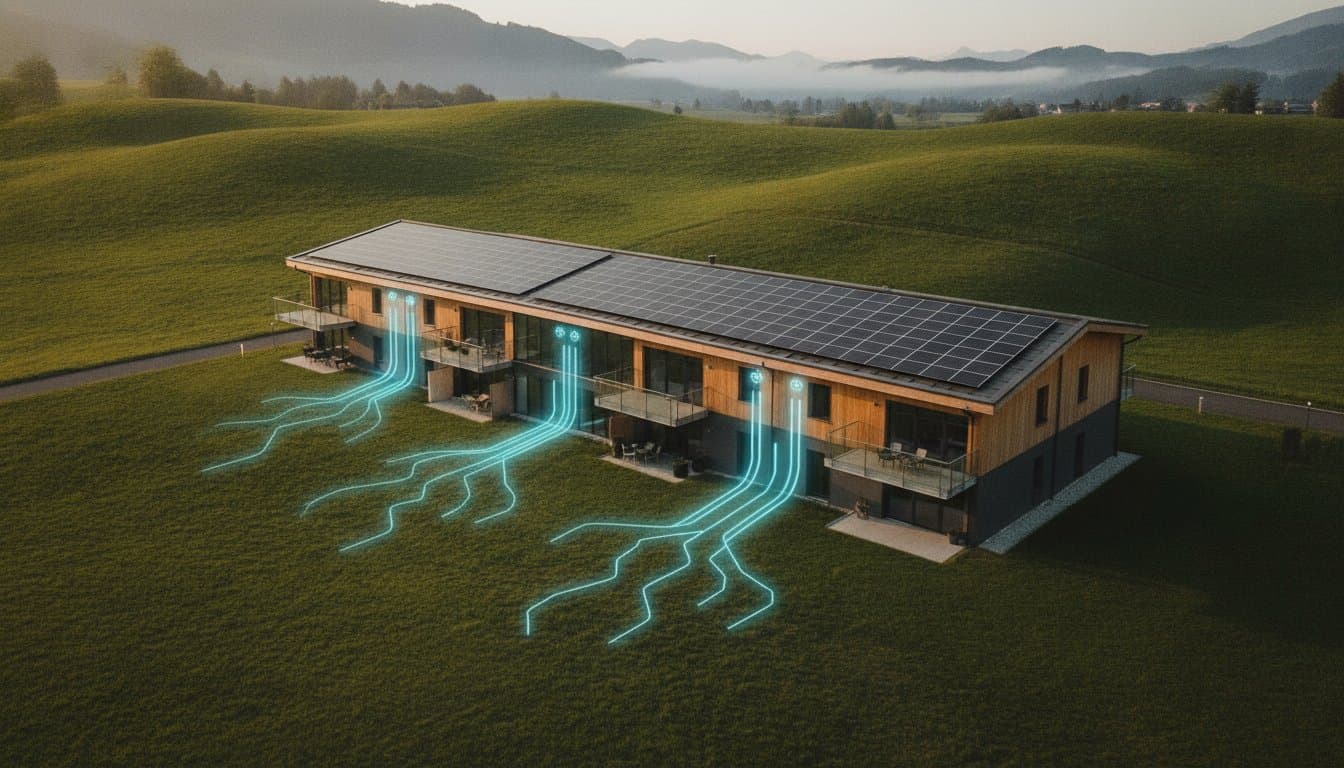
A Self-Consumption Association (ZEV) is a private group of multiple end users for the communal use of solar electricity consumed before the grid connection point. This allows solar electricity to be sold directly to tenants, significantly increasing economic viability.
Instead of feeding excess electricity into the grid for a low fee, it is sold directly to tenants. This increases the self-consumption rate and shortens the payback period of the system.
A ZEV allows for a significantly higher self-consumption rate and reduces the payback period of the solar system.
Legal Requirements for a ZEV Solar System in Switzerland
The Energy Act regulates the legal framework for operating a ZEV solar system. An important rule is the 10 percent rule, which mandates the minimum production capacity of the solar system compared to the property’s connection capacity.
Tenants benefit from protection within a ZEV and must not be financially disadvantaged. Owners must provide transparent billing.
Each residential unit must have its own sub-meter. Due to billing complexity, using external service providers is recommended.
The 10 percent rule is crucial for the legal approval of a ZEV solar system.
Economic Efficiency: Costs and Returns of a ZEV Solar System
A ZEV solar system offers an attractive business model for property owners. Through the direct use of electricity within the property, a high self-consumption rate is achieved, reducing the payback period.
An example shows that the self-consumption rate can often be increased to over 70 percent, significantly enhancing economic efficiency.
- Electricity price 2026: Median 27.7 Rp./kWh
- Feed-in tariff 2026: 3.896 Rp./kWh
- Payback period often 6 to 10 years in urban areas
High self-consumption rates significantly reduce the payback periods for a ZEV system.
vZEV and Practical Models: Modern Solutions for Neighborhoods
The introduction of the virtual ZEV (vZEV) allows for sharing solar electricity between adjacent properties without the need to lay new cables.
Local Electricity Communities (LEG) enable electricity trading via the public grid and significantly reduce grid costs.
With vZEV and LEG, integrating solar technologies in neighborhoods is easier and more flexible than ever.
Planning and Execution: How to Start Your ZEV Project
A structured approach is crucial for a successful ZEV project. A potential analysis and comparison of offers are initial steps.
Choosing an appropriate billing solution is essential to minimize administrative efforts.
Thorough planning and comparison of offers are crucial for a successful ZEV project.
Plan Your Energy Future with a System
A ZEV solar system is the secure way to economically and ecologically position properties. Rely on proven expertise and save up to 30 percent of investment costs. Now get free offers for your ZEV solar system.
Get Free OffersFrequently Asked Questions
What is the difference between self-consumption and ZEV?+
Self-consumption refers to the on-site use of self-produced solar electricity, while a ZEV is a model where multiple users share electricity, increasing the self-consumption rate.
Can a landlord force tenants to participate in a ZEV?+
Existing tenants cannot be forced to participate, while participation can be mandatory in new contracts.
How high can the electricity price within a ZEV be?+
The electricity price within a ZEV must not exceed the cost of the standard electricity product of the network operator.