
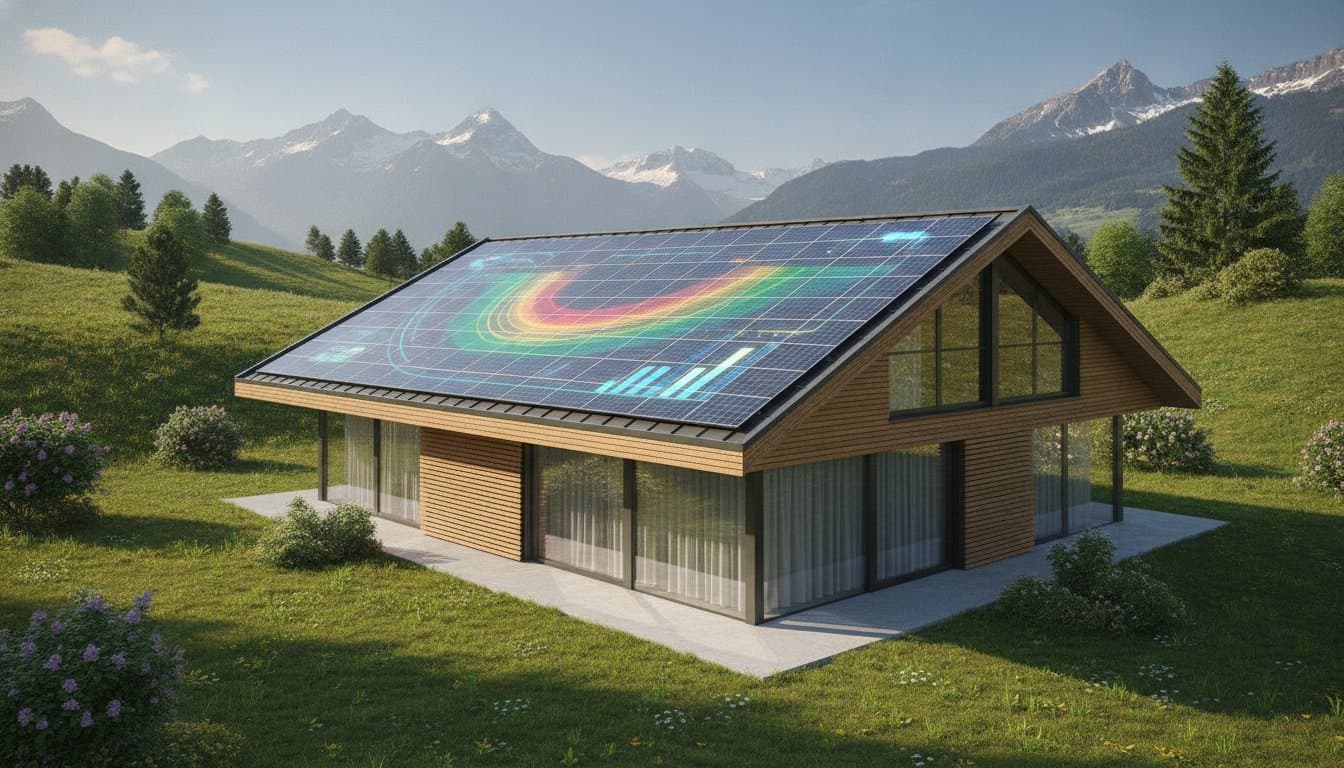
Why a Solar Calculator is Essential for Swiss Property Owners in 2026
A modern Swiss Solar Calculator is more than just a simple online tool. It acts as a digital first advisor, turning complex location data into tangible facts. The calculator determines the solar energy potential of your roof area, calculates the investment costs in CHF, and estimates the amortization period.
The importance of these tools has increased significantly due to rising electricity prices. A solar calculator allows you to explore various pricing scenarios and shows how much your savings increase as grid electricity prices rise. The aim is maximum independence.
- Time-saving through quick preliminary analysis
- Comparison of different configurations
- Theory of a solar calculator vs. experts on-site
A solar calculator forms the foundation for your solar investment and helps set the course for energy independence early on.
The Best Solar Calculators in Switzerland: A Direct Comparison
When searching for the right Swiss Solar Calculator, you encounter a wide range of tools. The data basis is decisive; tools that use GIS and local weather data are superior to those with generic values.
Sonnendach.ch and other platforms provide an independent assessment of potentials. PV Pro links data with real market conditions, which is particularly helpful for detailed questions about profitability.
Compare results from different calculators for a secure investment foundation.
How a Modern Solar Calculator Works: Data and Algorithms
A powerful Swiss Solar Calculator uses 3D models and precise MeteoSchweiz weather data. These capture the exact geometry of your house and forecast the global radiation for the entire year.
The integration of so-called sector coupling improves the simulation. The software incorporates the electricity demand from heat pumps or electric vehicles and forecasts economic viability over 25 years.
- Important input values: annual electricity consumption, roof pitch, available capital
- Weather data and location factors influence the result
Correctly Interpreting Results: Amortization and Self-consumption
Key figures in the Swiss Solar Calculator are the amortization period and self-consumption rate. An amortization period of 10 to 15 years is realistic. Even from the first day, the system reduces fixed costs.
It is important to distinguish between self-consumption rate and degree of autonomy. High self-consumption is often more economical, while degrees of autonomy indicate independence from the grid.
- Tax advantages: deduction of investment costs
- Strategic full roof coverage enhances profitability
A well-founded analysis of the results maximizes your financial and energy gains.
From Solar Calculator to Finished System: The Path to Your Offers
The theory from the solar calculator forms the foundation for concrete offers. Five clear phases structure the path from calculation to installation. These range from inquiry to project planning.
Obtain at least three tailored offers to optimize quality and value for money.
- Use calculator results for targeted inquiries.
- Compare three offers for maximum transparency.
A structured approach from calculation to final installation ensures cost-effective and high-quality results.
Start Your Solar Future Now
Planning your photovoltaic system doesn't have to be complicated. A Swiss Solar Calculator provides the necessary transparency to assess your roof's potential and amortization accurately.
Check Solar Potential Now and Receive 3 Free OffersFrequently Asked Questions
How accurate is a Swiss Solar Calculator really?+
A Swiss Solar Calculator offers an accuracy of about 80 to 90 percent for initial potential analysis, but it does not replace an on-site assessment by an expert.
What data do I need for a calculation with the solar calculator?+
For a reliable calculation, you need your address and your annual electricity consumption in kWh. Additional information about roof pitch and planned investments increases precision.
Does the solar calculator also consider battery storage?+
Yes, modern calculators simulate with and without battery storage to determine the ideal ratio between storage capacity and system size.