
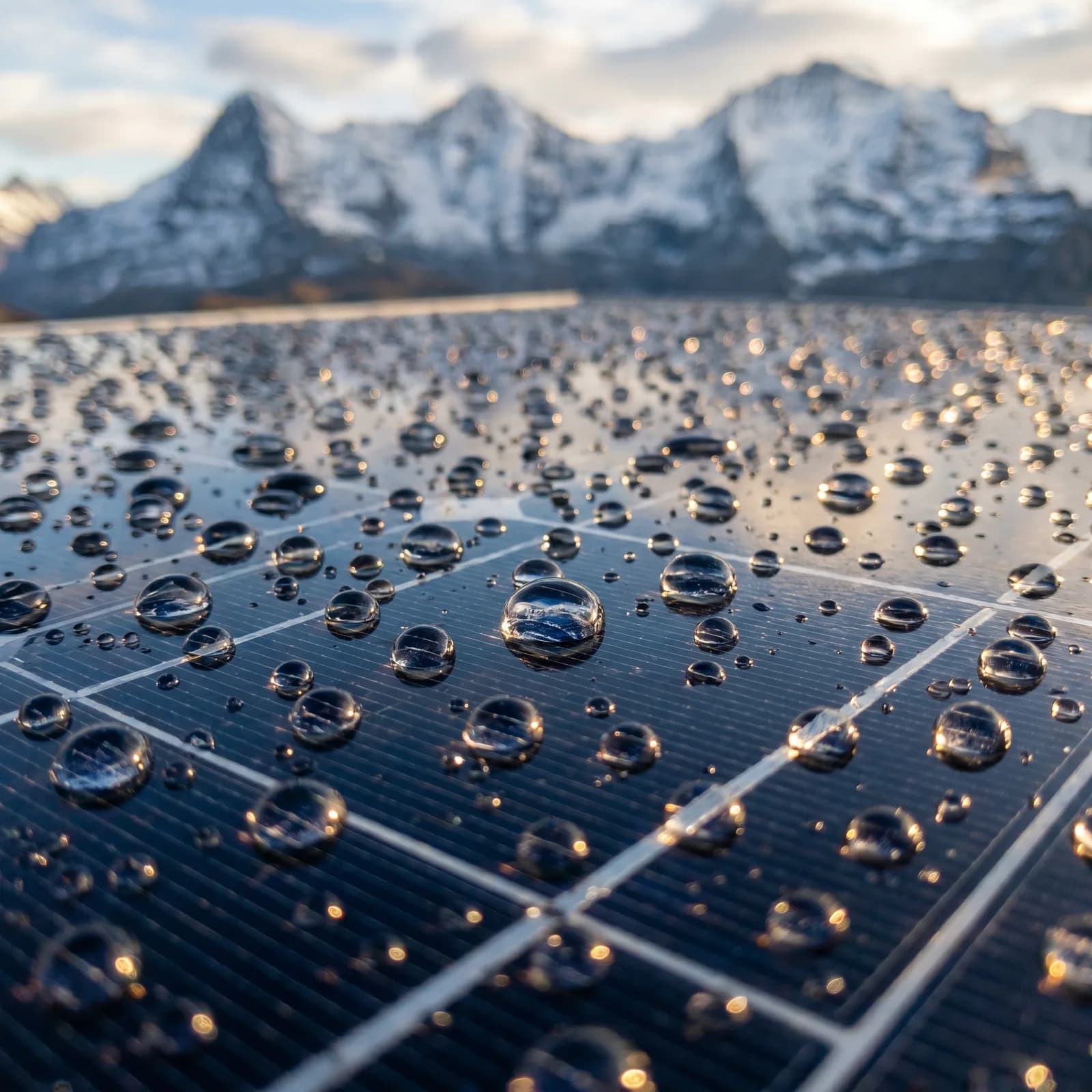
Solar panels in winter: what really matters
Many people assume solar panels are useless in winter. The opposite is true: cold temperatures actually improve the efficiency of solar modules. PV cells work better physically at low temperatures than in heat.
Snow slides off
from 35°
Snow on the panels: a problem or a minor issue?
Snow on panels temporarily reduces output. The black module surface also heats up and melts the snow cover.
For flat roofs, we recommend mounting at 15–20° tilt to minimise snow accumulation and maximise winter production.
- Tilt from 35°: snow slides off naturally
- Black surface actively melts snow
- Flat roofs: 15–20° tilt recommended
- New bifacial modules use snow reflection
The 2026 winter power bonus: new subsidy for steep installations
From 2026, the Swiss federal government rewards solar installations with steep tilt angles (from 60°) and good winter production with a winter power bonus.
This bonus is especially relevant for alpine cantons, where winter lasts longer and snow reflection boosts production further.
Frequently Asked Questions
Does my solar system produce electricity in winter?+
Yes, definitely. Cold temperatures actually improve cell efficiency.
Do I need to remove snow from my solar panels?+
Generally no. The black module surface helps melt snow actively.
What is the 2026 winter power bonus?+
The Swiss government rewards steep installations (from 60° tilt) with a bonus on the EIV subsidy from 2026.
Is solar worth it in a snowy canton like Grisons?+
Yes, even more so. Snow reflects sunlight onto the panels (albedo effect) and increases yields. Grisons installations often produce more in winter than those on the Swiss Plateau.
PvPro.ch
Solar guides
Information from PvPro.ch about solar installations, costs, subsidies and comparing quotes in Switzerland.
About PvPro.ch →Indicative values, updated September 2026. Sources: Pronovo, ElCom, Swissolar.
Get solar working year-round – request a quote now
A modern solar system produces electricity 12 months a year. Get 3 free quotes now and benefit from the 2026 winter power bonus.
Request a free quote