
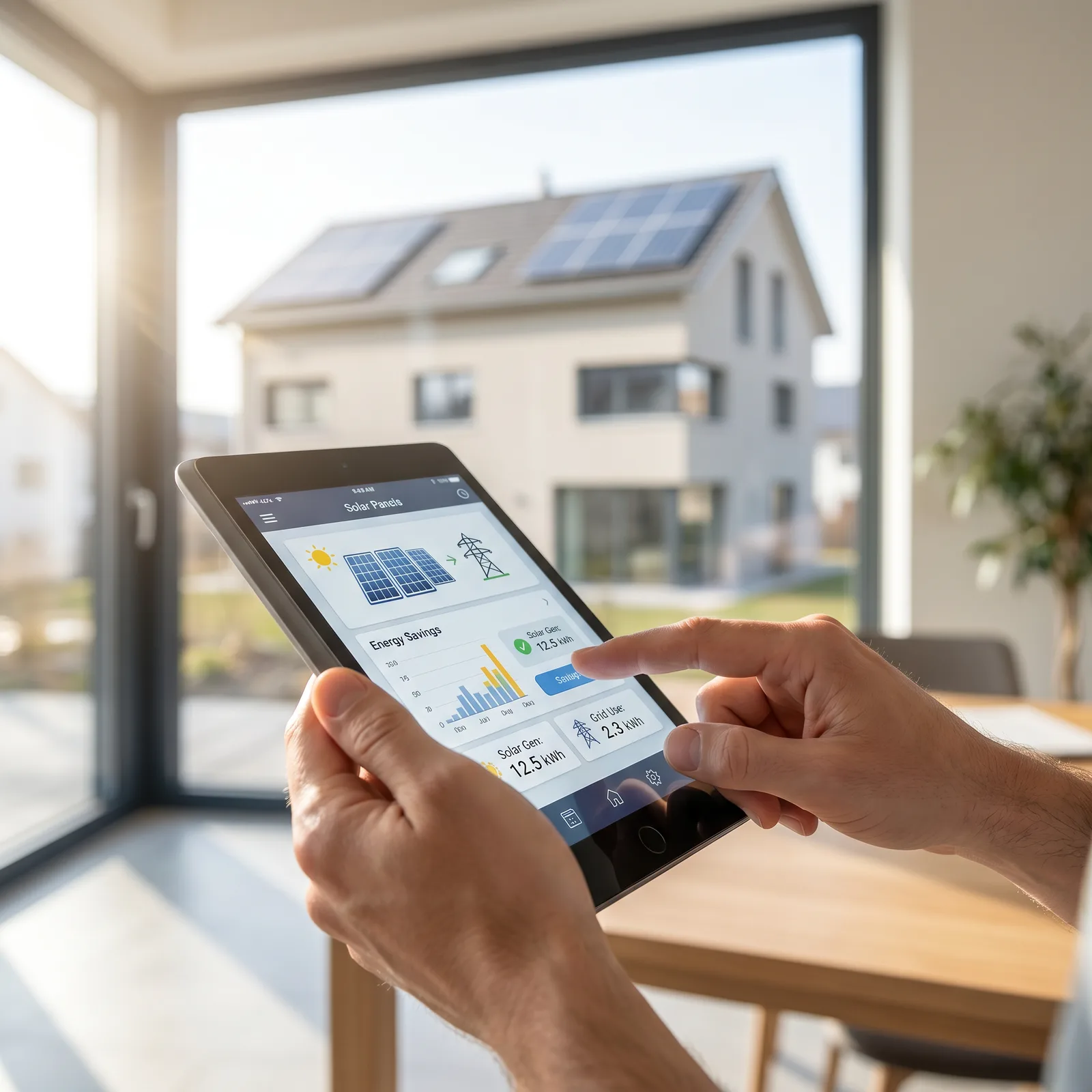
How is the ROI of a solar system calculated?
The return on investment (ROI) of a solar system is: (Annual savings + feed-in income) ÷ (Investment costs – subsidies). The payback period in years is the reciprocal of the annual ROI.
Example: 5 kWp system in Zurich, cost CHF 12,000, EIV CHF 3,200 → net investment CHF 8,800. Annual savings: CHF 1,400 → payback: 8,800 ÷ 1,400 = 6.3 years.
Average payback CH
7–10 years
Best canton
Ticino (4–6 yrs)
Geneva (with SIG)
7–9 years
After payback
100% profit
Key factors: what determines ROI most
The three most important factors are: (1) local sunshine hours, (2) self-consumption rate and (3) local electricity price. A household in Lugano with a heat pump has a completely different ROI than one in St. Gallen without storage.
- Sunshine: Ticino 2,157 h vs St. Gallen 1,522 h
- Electricity price: impact up to ±2 years on payback
- Self-consumption: from 25% to 80% possible
- Subsidies: up to 35% of costs covered
ROI comparison by canton in 2026
There are large differences between cantons. The best payback is achieved in Ticino and Valais; the worst in eastern cantons with little sunshine and low electricity prices.
- Ticino: 4–6 years (2,157 sunshine hours)
- Valais: 6–8 years (alpine bonus)
- Geneva: 7–9 years (SIG bonus)
- Zurich/Bern: 7–9 years
- Grisons: 6–9 years (altitude bonus)
- St. Gallen: 9–12 years
In Ticino, a solar system pays off in just 4–6 years – the best ratio in Switzerland.
What happens after payback?
After payback, the system produces another 15–20 years of electricity – completely free. The total net savings of a 5 kWp system over 25 years is typically CHF 25,000–40,000.
Solar modules have a guaranteed lifespan of 25–30 years. They lose about 0.5% of output per year – after 25 years they still produce 87–88% of original output.
- Module lifespan: 25–30 years
- Performance degradation: approx. 0.5%/year
- Total savings over 25 years: CHF 25,000–40,000
- Property value increase: 3–5% documented
Calculate your system ROI – free analysis
Our partner installers calculate the exact ROI for your specific situation. Free consultation and quote.
Request a free quoteFrequently Asked Questions
How long does a solar system take to pay off in Switzerland?+
On average 7–10 years, depending on canton, system size and usage pattern. In Ticino, only 4–6 years; in St. Gallen, up to 12 years. After payback, the system still produces 15–20 years of profit.
How much does electricity price affect ROI?+
Very significantly. A household at CHF 0.32/kWh has a 2–3 year better ROI than one at CHF 0.25/kWh. Rising electricity prices automatically improve the ROI of existing systems.
Does ROI improve with a battery?+
Often yes, if you have high evening and night consumption. With an EV or heat pump, the ROI of the combination improves by 1–2 years as self-consumption rises to 70–80%.
Does a solar system increase property value?+
Yes. Studies show a 3–5% increase in value for properties with solar systems. The effect is particularly measurable in energy-conscious cantons like Zurich or Geneva.