
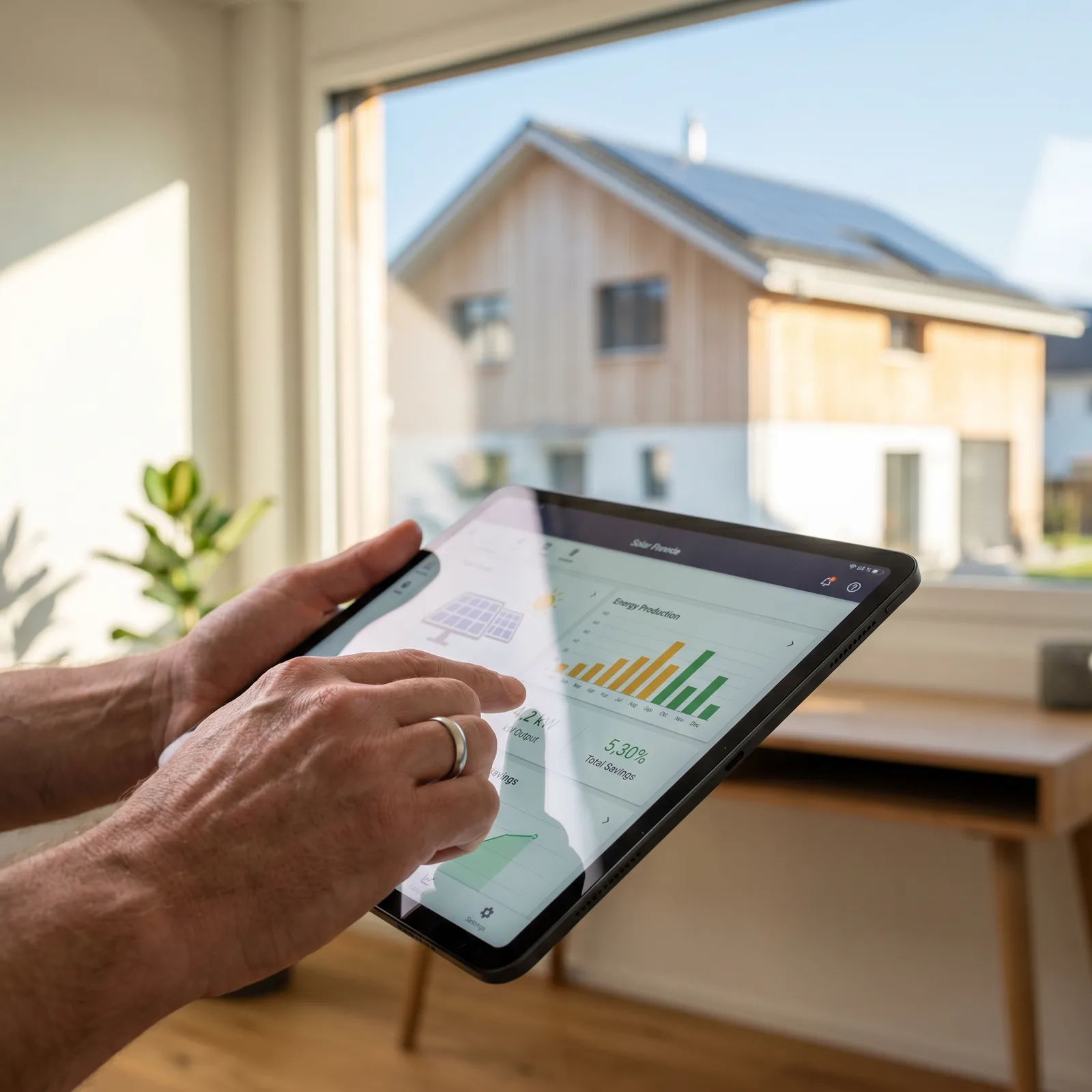
Why self-consumption matters so much
Surplus solar electricity fed into the grid is paid at approx. CHF 0.08–0.14/kWh. Self-consumed electricity saves CHF 0.28–0.34/kWh in grid costs – three times the value. Every additional percentage point of self-consumption significantly improves your ROI.
Grid feed-in
CHF 0.08–0.14/kWh
Self-consumption
CHF 0.28–0.34/kWh
Value difference
3×
Target
70–80%
Strategy 1: Shift programmable appliances
Dishwasher, washing machine and tumble dryer use a lot of electricity – and can easily be programmed to run during peak solar hours (11am–3pm). Modern appliances with timers or smart home controls make this simple.
- Washing machine: set to 12pm–2pm
- Dishwasher: after lunch
- Tumble dryer: right after the washing machine
- Hot water: boost during solar hours
Strategy 2: Integrate heat pump and EV
A heat pump and an electric vehicle are the biggest self-consumption boosters. Both can run on solar electricity during the day, pushing self-consumption to 60–80% without a battery.
Smart chargers (e.g. myEnergi zappi) only charge when sufficient solar electricity is available.
- EV charged on solar: approx. CHF 0.40/km saving vs grid
- Heat pump at maximum during day: up to 5 kWh self-consumed/day
- Smart charger: charges only in sunshine
- Air-source heat pump compatible with all solar systems
Heat pump + EV + solar: self-consumption 65–80%, total costs drastically reduced.
Strategy 3: Local Energy Community (LEC)
From 2026, you can sell your surplus electricity directly to neighbours in the same area. In an LEC, you receive more than the feed-in tariff and your neighbours pay less than the grid price – a win-win.
- LEC payment: approx. CHF 0.15–0.20/kWh (vs 0.08–0.14 grid)
- Neighbour pays: approx. CHF 0.20–0.25/kWh (vs 0.28–0.34 grid)
- Simple setup through local grid operator
- Especially attractive in apartment buildings and housing estates
Maximum self-consumption optimisation – request a quote
PVPro installers plan for maximum self-consumption from the start. Free consultation and quote.
Request a free quoteFrequently Asked Questions
What is a realistic self-consumption rate without a battery?+
Typically 25–35% for a normal household. With timer-controlled use of large appliances, it rises to 35–45%. With a heat pump or EV, to 50–65%.
Is a home battery worth it purely for self-consumption?+
In most cases yes, if you have high evening and night consumption. If you have an EV or heat pump, self-consumption can already be very high without a battery.
How does a Local Energy Community (LEC) work?+
Neighbours group together and share solar electricity between them. The electricity flows via the local grid, with grid fees reduced by up to 40%. Set up through your local grid operator.
Can smart home systems automatically optimise self-consumption?+
Yes. Systems like Fronius Solar.web, SMA Sunny Home Manager or Loxone can automatically control appliances and maximise self-consumption without manual effort.