
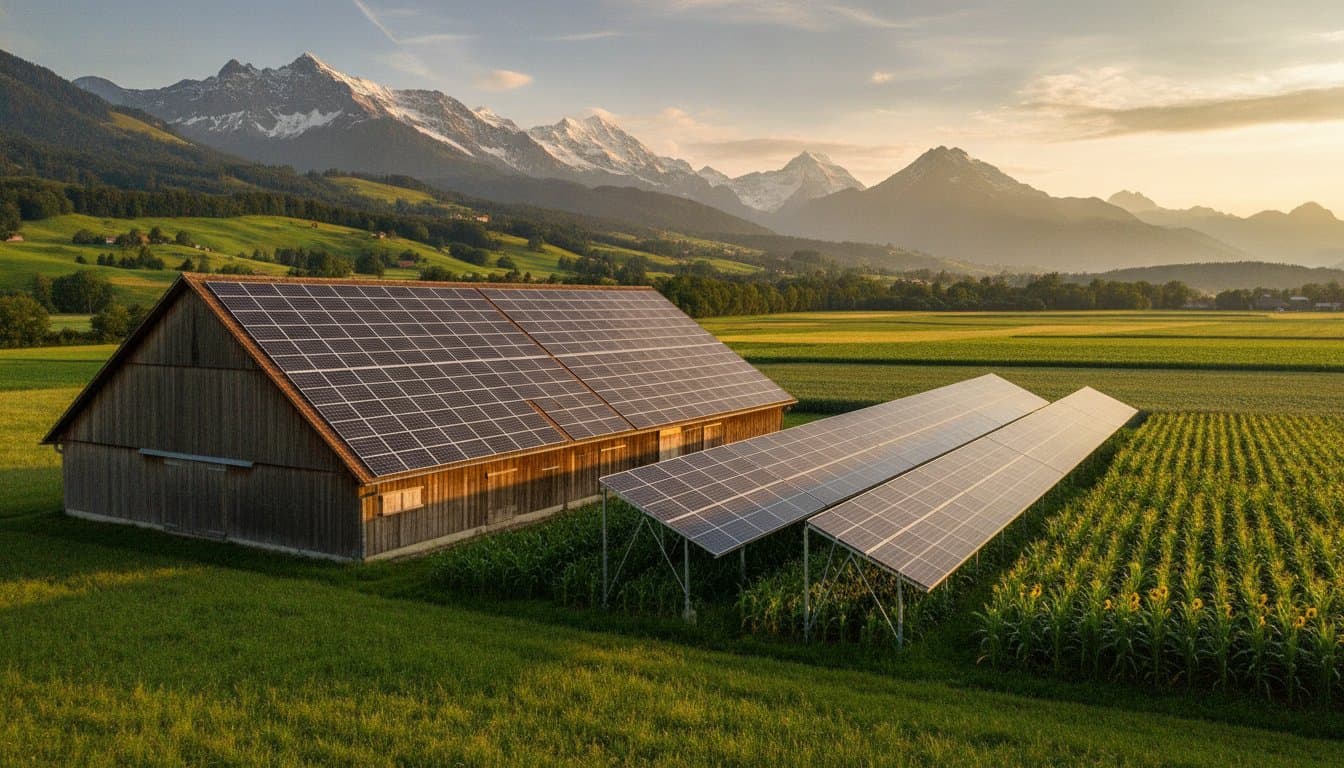
Why a Solar System for Agriculture is More Worthwhile Than Ever in 2026
Energy costs in Switzerland are a significant factor for the profitability of any agricultural operation in 2026. A solar system for agriculture is no longer an experiment but has become an economic necessity. Large roof areas on barns, machine halls, and silos provide ideal conditions, as they are usually unobstructed and allow for high installed capacity.
Modern solar modules are now specifically certified for the harsh conditions in agriculture. They are ammonia-resistant and withstand the aggressive barn air for decades without losing performance. Your operation contributes visibly to the Swiss energy strategy. This strengthens your farm's image, as consumers increasingly value sustainably produced food.
With a solar system, you make a visible contribution to Switzerland's energy strategy and strengthen your farm's image.
Roof Systems vs. Agro-PV: The Best Solutions for Agricultural Operations
Choosing the right system is crucial for the profitability of your solar installation. While traditional rooftop systems on buildings impress with high efficiency, agro-photovoltaics offer new perspectives for cultivated land. Building-integrated systems replace conventional roofing and provide good weather protection.
Open-field systems are an option for unused slopes or peripheral areas to sensibly utilize barren zones energetically.
- Simplified authorization process for rooftop systems.
- Agro-PV directly combines electricity production with crop farming.
- Building-integrated systems offer good aesthetics and protection.
Profitability and Funding: How Swiss Farmers Finance Their Solar System
The financing of a solar system is crucial for many. In 2026, the attractiveness is high due to government subsidies, tax advantages, and self-consumption models.
A targeted self-consumption consortium increases profitability, while tax deductibility and cantonal peculiarities can also be utilized.
Legal Framework and Authorizations Outside Designated Zones
The construction of a solar system for agriculture often takes place outside designated zones, which brings specific legal requirements. Swiss law distinguishes between a simple notification procedure and an authorization process.
Collaboration with cantonal authorities is crucial to harmonize the interests of landscape protection and energy production.
Practical Examples and the Path to the Optimal Solar Offer
A berry farm uses agro-PV for electricity and as hail protection.
For large projects, compare at least three offers to avoid higher costs or losses in yield in the long run.
- Careful comparison of system components and installation types.
- Consideration of specific challenges on farms.
Frequently Asked Questions
Does a solar system on a barn roof require a building permit?+
Yes, generally, a simplified notification procedure is often sufficient, provided the system fits. In protected landscapes, a formal process may be necessary.
Is agro-PV also worth it for arable farming or just for special crops?+
Agro-PV offers benefits for both special crops and arable farming, such as weather protection and increased efficiency through dual land use.
PvPro.ch
Solar guides
Information from PvPro.ch about solar installations, costs, subsidies and comparing quotes in Switzerland.
About PvPro.ch →Indicative values, updated September 2026. Sources: Pronovo, ElCom, Swissolar.
Setting the Course for an Energy-Independent Agricultural Operation
A solar system for agriculture in 2026 is far more than just a technical upgrade. Through self-consumption rates and government compensations, protect yourself against fluctuations in energy costs. Benefit from the power of the sun now!
Request 3 Free Quotes Now